
Dorchester County Criminal Court Records
Dorchester County criminal court records are case-level records, not just arrest notes. The criminal side of Circuit Court is General Sessions, and Dorchester County is part of South Carolina Judicial Circuit 1. The Clerk of Court supports Circuit Court and keeps General Sessions records, including the criminal filings that move through the courthouse after charges are filed. The Criminal Clerk can be reached through the St. George courthouse, while the main Clerk of Court contact handles broader court-record questions.
A full Dorchester County criminal court record can include charging instruments, warrants, bond records, indictment or accusation details, motions, plea forms, hearing entries, disposition, sentencing sheets, probation terms, and docket activity. Magistrate Court may issue arrest and search warrants, set bail, and conduct preliminary hearings before a matter moves further. Municipal Court may keep lower-level city or town cases. For a narrower look at alleged offenses and court charges after arrest, use the charge-record page; the criminal court record is the larger case file and final outcome trail.
Search Dorchester Criminal Cases
The main online route is the Dorchester Public Index, reached from the South Carolina Judicial Branch Case Records Search system. The county Magistrate case-search page also redirects to that Public Index. The state search page says cookies and JavaScript must be enabled, and case-detail pages may require a browser pop-up exception. Some Municipal Court matters can appear in Public Index, but the research does not show that every municipal case is included there.
- Open the Dorchester Public Index and accept the search terms and security check.
- Search by case number when known, or use a defendant name with only a few filters at first.
- Narrow by court type, court agency, case type, subtype, action type, or date range if too many results appear.
- Open the case number link to review charges, docket events, hearings, disposition, and sentence entries where shown.
- Contact the Clerk of Court or Criminal Clerk when a certified copy, older file, or non-online record is needed.
The official phone fallback matters because the index is not the whole file. Dorchester Clerk of Court is listed at (843) 563-0160, and the Criminal Clerk is listed at (843) 563-0231. Magistrate Court can be reached in St. George at (843) 563-0370 and in Summerville at (843) 832-0370. Public records outside ordinary court-index access may route through Dorchester County's NextRequest public-records portal, while sheriff and jail records use sheriff channels rather than the clerk.
Dorchester Criminal Case Flow
A Dorchester County criminal court record grows as the case moves from charge filing to final action. Magistrate Court may handle warrants, bond, and preliminary hearings. General Sessions handles the Circuit Court criminal case once the prosecution reaches that level. The First Judicial Circuit Solicitor prosecutes felony and serious misdemeanor matters, and the Public Defender may be appointed for an indigent person charged with an offense that could lead to jail or prison.
Case flow: Charges Filed › Arraignment › Pretrial / Motions › Plea or Trial › Disposition › Sentencing
| Stage | What Happens |
|---|---|
| Charges filed | The record starts to show alleged offenses, charge descriptions, agency or court routing, and any warrant or bond context. |
| Arraignment | The defendant is called into court, the charge is addressed, and a plea or next setting may be recorded. |
| Pretrial and motions | Attorneys file requests, orders, discovery-related events, continuances, or hearing entries that become docket activity. |
| Plea or trial | The case may resolve by guilty plea, trial verdict, dismissal, or prosecutor decision not to continue a charge. |
| Disposition and sentencing | The final outcome, sentence, probation term, or deferred program result is recorded when available. |
What Dorchester Criminal Records Show
The Public Index and related clerk records may show different levels of detail depending on the case, court, and filing type. The research file confirms common case fields from official portal notes and court descriptions, but it also flags that a live Dorchester Public Index sample case could not be inspected in the local environment. That means exact on-screen labels can vary. The core record still follows the same court-file logic: identity, court, case type, filings, events, charges, warrant or bond notes, and outcome.
| Field | What It Shows |
|---|---|
| Case number | The court's file number, used for exact searches and copy requests. |
| Court or agency | The court level or agency tied to the case, such as General Sessions, Magistrate, or Municipal Court. |
| Defendant name | The person charged in the criminal case, with party information shown by the index where public. |
| Filing or arrest date | Date filters may relate to filing, disposed, judgment, or arrest dates depending on search type. |
| Charge or offense data | Charge descriptions, offense codes, indictment or accusation details, and related warrant or bond entries. |
| Docket events | Hearings, motions, orders, plea events, court roster entries, and other case actions. |
| Disposition and sentence | The final charge result and sentence, probation, or other court-ordered terms where posted. |
The South Carolina Judicial Branch expungement overview is one official source for criminal-record cleanup rules.  Expungement is part of criminal-record interpretation because a public search may no longer show a charge or conviction after a valid order is processed.
Charges vs Convictions
A Dorchester County criminal court record can contain accusations that did not become convictions. A charge states that an offense was alleged. A conviction means the charge ended in a guilty plea or finding of guilt. The distinction is central when reading General Sessions files, Magistrate matters, bond entries, and expungement eligibility. A case can also include several charges with different outcomes, so each line should be read on its own.
| Charge | Conviction | |
|---|---|---|
| Record meaning | An alleged offense filed after arrest, warrant, citation, indictment, or accusation. | A final guilty outcome by plea or finding. |
| Where it appears | Booking, warrant, bond, Public Index, and case filings may all show it. | Disposition, sentencing, probation, and final case-result entries show it. |
| Possible outcome | May be amended, reduced, dismissed, nolle prossed, or resolved through a program. | May lead to sentence, probation, fines, program terms, or later expungement only if law allows. |
Dorchester Dispositions and Sentences
Disposition means the final result of a charge or case. A Dorchester County criminal court record may show guilty, not guilty, dismissed, closed, nolle prosequi, or a deferred program outcome when the official entry is available. Nolle prosequi means the prosecutor chose not to pursue that charge. Sentence means the punishment or court-ordered terms imposed after conviction, such as probation, custody, fines, or other conditions.
Dorchester criminal cases can also touch First Judicial Circuit Solicitor programs. The research identifies Adult Drug Court for certain non-violent defendants with alcohol or drug addiction, Pre-Trial Intervention for selected defendants, and the Traffic Education Program for eligible citations. Completion of a diversion path may affect later expungement, but it does not mean the original arrest, charge, or court action never existed until the proper order is entered and processed.
The General Sessions expungement process is the official path for many higher-level Dorchester criminal court files.  General Sessions records should be checked through the case record first, then through the Solicitor or clerk process if expungement eligibility is the issue.
Sealed vs Expunged Records
Sealed and expunged records are not the same thing. South Carolina court rules and statutes restrict public access to some records, including juvenile matters, sealed filings, adoption matters, and protected personal identifiers. Expungement is the process that removes, seals, or destroys eligible state records of an arrest, charge, or conviction. Once that happens, a public lookup should not be treated as a reliable way to find the original charge.
| Sealed | Expunged | |
|---|---|---|
| Public view | Hidden or restricted by rule, order, or statute. | Removed, sealed, or destroyed where the expungement order applies. |
| Common examples | Juvenile files, adoption files, confidential reference lists, and protected personal data. | Eligible dismissed, nolle prossed, not-guilty, program-completion, or limited first-offense records. |
| Dorchester route | Ask the court or clerk that controls the file if public access is denied. | Use the court, Solicitor, or summary-court process tied to the original case level. |
The official Magistrate and Municipal expungement process applies to qualifying summary-court matters.  This is relevant in Dorchester County because Magistrate Court and Municipal Court handle lower-level criminal, traffic, warrant, and failure-to-appear matters before any full Circuit Court record exists.
Dorchester Criminal Records Access
South Carolina public-access law supports inspection and copying of many public records, but court records have important limits. South Carolina Freedom of Information Act Title 30 Chapter 4 gives the general public-records framework, including access rights and exemptions. Court rules also govern sealed records and redaction. Dorchester County routes general public-records requests through NextRequest or by mail, while court-specific requests often stay with the Clerk, Family Court, Probate Court, Magistrate Court, or sheriff records office depending on the file.
Key Statutes:
SC Code Title 30 Chapter 4 generally allows public records to be inspected or copied unless an exemption applies.
South Carolina Rule 41.2 restricts public access to personal identifiers and confidential reference lists.
South Carolina statutes also matter after a case closes. SC Code Section 17-22-950 covers summary-court expungement for dismissed, nolle prossed, or not-guilty charges.  Summary-court expungement can affect Dorchester Magistrate and Municipal Court records, which may be the only criminal court records for a lower-level charge.
Dorchester Criminal Background Limits
A public criminal court record lookup is not the same as a regulated background check. Public Index entries, clerk copies, jail booking data, and statewide code tools may describe different slices of one event. A court record can also lag behind a hearing, omit confidential details, or display a charge that later changed. For employment, housing, credit, insurance, or other regulated screening, the Fair Credit Reporting Act and state law require proper consumer-reporting procedures.
Important: Do not treat a public case search as a complete criminal-history report for FCRA-regulated decisions.
Restricted Dorchester Criminal Records
Juvenile records are confidential under South Carolina law, and Dorchester Clerk maintains juvenile court paperwork without making it open to ordinary public search. Family Court matters involving juveniles are restricted under the juvenile statutes cited by the county. Adoption records are sealed after final decree. Probate mental-health, guardianship, and conservatorship records are protected. Personal identifiers may be redacted, and the South Carolina Judicial Branch notes that home address information is no longer displayed on the public index for new and existing cases as of January 1, 2026.
The SC Code Section 22-5-910 expungement statute covers certain first-offense Magistrate or Municipal Court convictions after a waiting period. 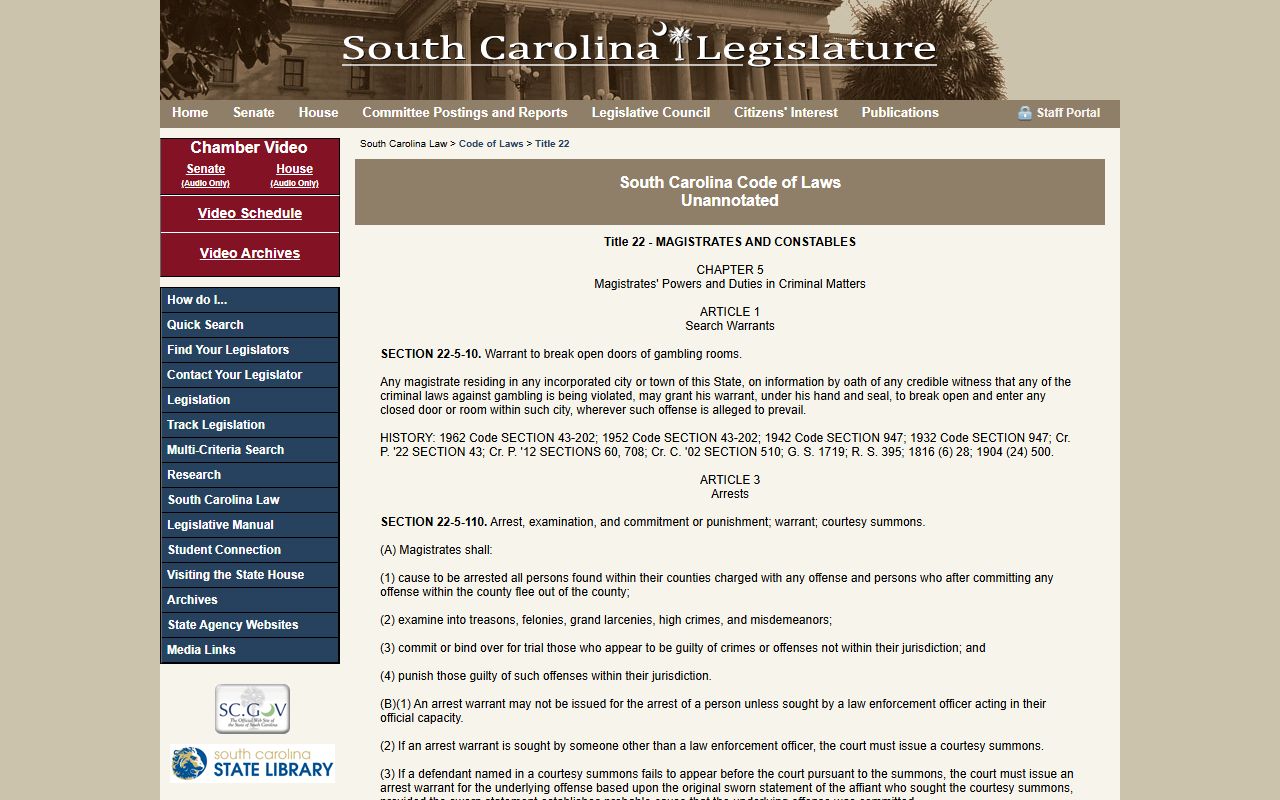 This statute is separate from General Sessions expungement and should be matched to the court level that handled the original Dorchester charge.
The traffic-related expungement rule at SC Code Section 56-5-750(f) is narrow. 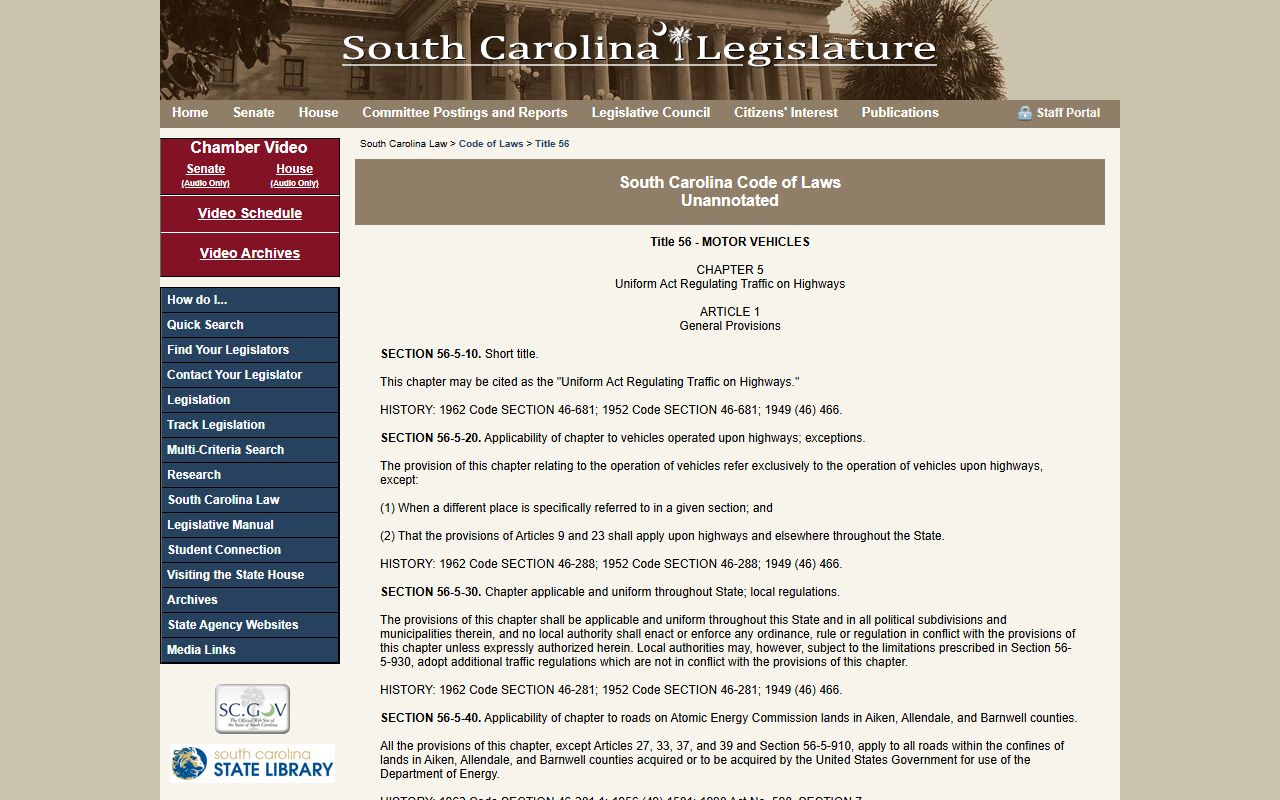 It matters only for qualifying failure-to-stop motor vehicle offenses that meet the listed conditions, not for every traffic or criminal court record.
Note: If a Dorchester County case is missing from public search, check sealing, expungement, juvenile status, and court-level routing before assuming no case exists.