
Dorchester County Arrest Records and Charges
Dorchester County arrest records document the arrest and booking side of an event. The official sheriff custody route is Citizen Connect, which can show current confinement information, booking photo, inmate name, demographics, booked date or time, arresting agency, arrest date or time, bond total, charges count, charge descriptions, bond amount, bond type, and a full-detail booking link when available. Those jail records are separate from the court charge record.
The court charge record begins when an alleged offense is filed in a court channel. South Carolina uses Solicitors rather than District Attorneys, and Dorchester County is in the First Judicial Circuit Solicitor's Office. Charge information may appear in Citizen Connect, Criminal Data Report offense-code tools, Magistrate warrant or bond records, Municipal Court files, and General Sessions records after the prosecution reaches Circuit Court. The full case outcome belongs in Dorchester County criminal court records, while this page focuses on arrest records and the charges after arrest.
Find Dorchester Arrest Records
Start with the correct system for the fact being checked. Booking and custody details are searched through the Dorchester County Sheriff's Office Citizen Connect inmate confinements tool or by calling the Detention Center at (843) 832-0215. Filed court charges are checked through the Dorchester Public Index, the Magistrate or Municipal Court that handled the case, or the Clerk of Court's Criminal Clerk for General Sessions matters.
- Use Citizen Connect first when the issue is current custody, booking date, arresting agency, bond, or booking-level charges.
- Use Public Index when the issue is a filed court charge, case number, court agency, docket event, or disposition.
- Call Magistrate Court for summary-level warrant, bond, preliminary hearing, traffic, or minor criminal matters.
- Call a Municipal Court when the arrest or citation came from Summerville, St. George, Harleyville, Ridgeville, Reevesville, or another municipal court venue.
- Call the Criminal Clerk at (843) 563-0231 when a General Sessions charge or certified copy is involved.
The South Carolina Judicial Branch CDR Codes search helps decode criminal offense codes used in court processing. 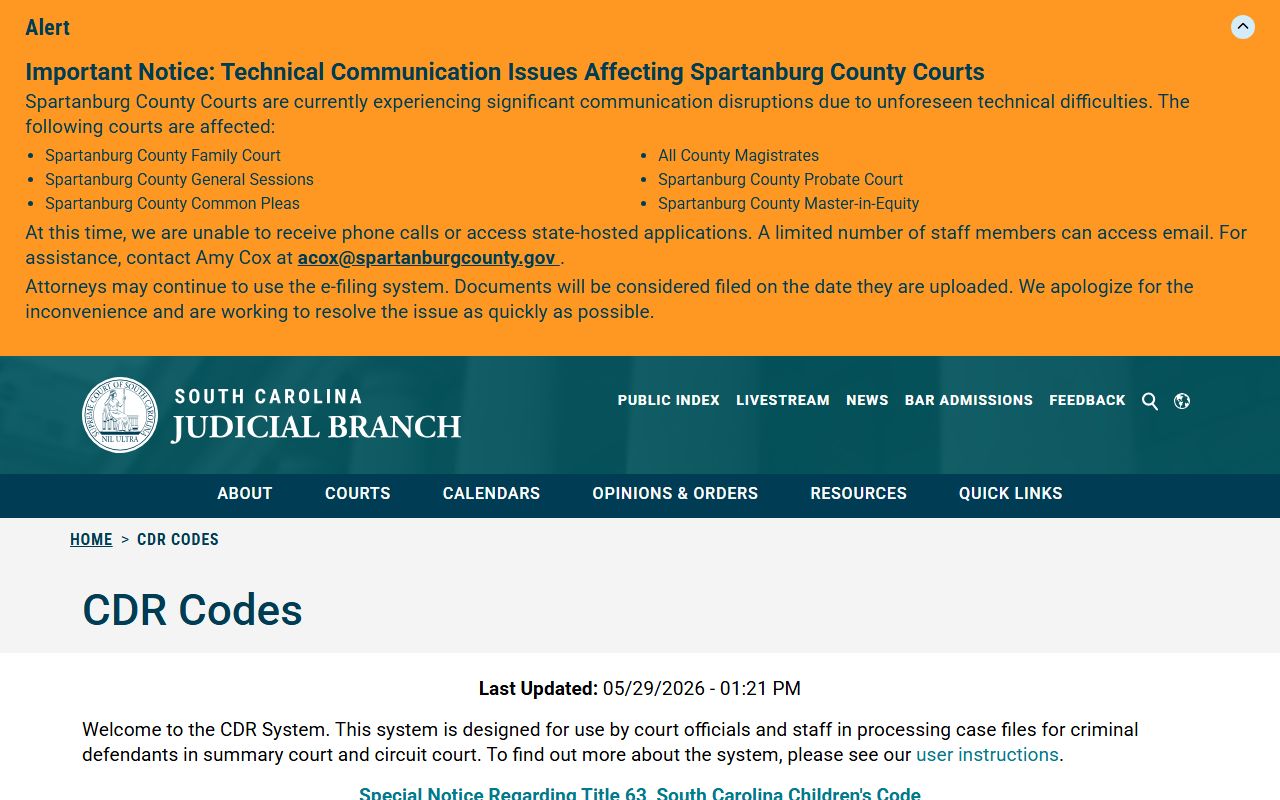 CDR codes are not a warrant search or criminal-history report, but they help explain the offense label shown in Dorchester court charge records.
How Charges Get Filed After an Arrest: Complaint, Information, and Indictment
An arrest does not always equal a final court charge. Law enforcement may make the arrest, jail staff may book the person, Magistrate Court may address warrant and bond issues, and the Solicitor may decide how to prosecute a case. A court charge record is narrower than the whole case file because it identifies the alleged offense, agency, charge description or code, warrant or arrest context, and bond information. It may not yet include plea, trial, disposition, or sentence.
| Complaint | Information | Indictment | |
|---|---|---|---|
| Filed by | Officer, complainant, or prosecutor route depending on court level. | Prosecutor route where the state proceeds by formal accusation. | Grand jury route for serious General Sessions prosecution. |
| Common Dorchester context | Summary criminal, warrant, bond, or lower-court matters. | Solicitor-led prosecution where charges are formally stated. | Higher-level criminal matters in Circuit Court General Sessions. |
| What it does | Identifies the alleged offense and starts court handling. | States the charge the Solicitor chooses to pursue. | Accuses the defendant after grand jury action. |
The First Judicial Circuit Solicitor's Office lists a Dorchester office in St. George and handles criminal prosecution for the county. The Solicitor also administers programs that can affect charge outcomes, including Adult Drug Court, Pre-Trial Intervention, Traffic Education Program, Alcohol Education Program, expungements, victim and witness services, and Worthless Check Program matters.
Dorchester Charge Status Terms
Charge status can change after an arrest. The booking view may show the charge description known at intake, but the court record can later show an amended, reduced, dismissed, or nolle prossed charge. One arrest can produce several separate court charges. Each charge should be matched to its own status, because one count may be dismissed while another count results in a plea or sentence.
| Status | What It Means |
|---|---|
| Pending | The charge is filed or active, but no final outcome is shown yet. |
| Amended or reduced | The original alleged offense changed to a different charge, level, or description. |
| Dropped or dismissed | The charge did not proceed to conviction, subject to the exact court entry. |
| Nolle prosequi | The prosecutor decided not to pursue the charge further. |
| Guilty or convicted | The case ended in a guilty plea or finding and may show sentence or probation terms. |
The CDR code user instructions explain how criminal offense codes should be read and caution against treating code data as legal advice. 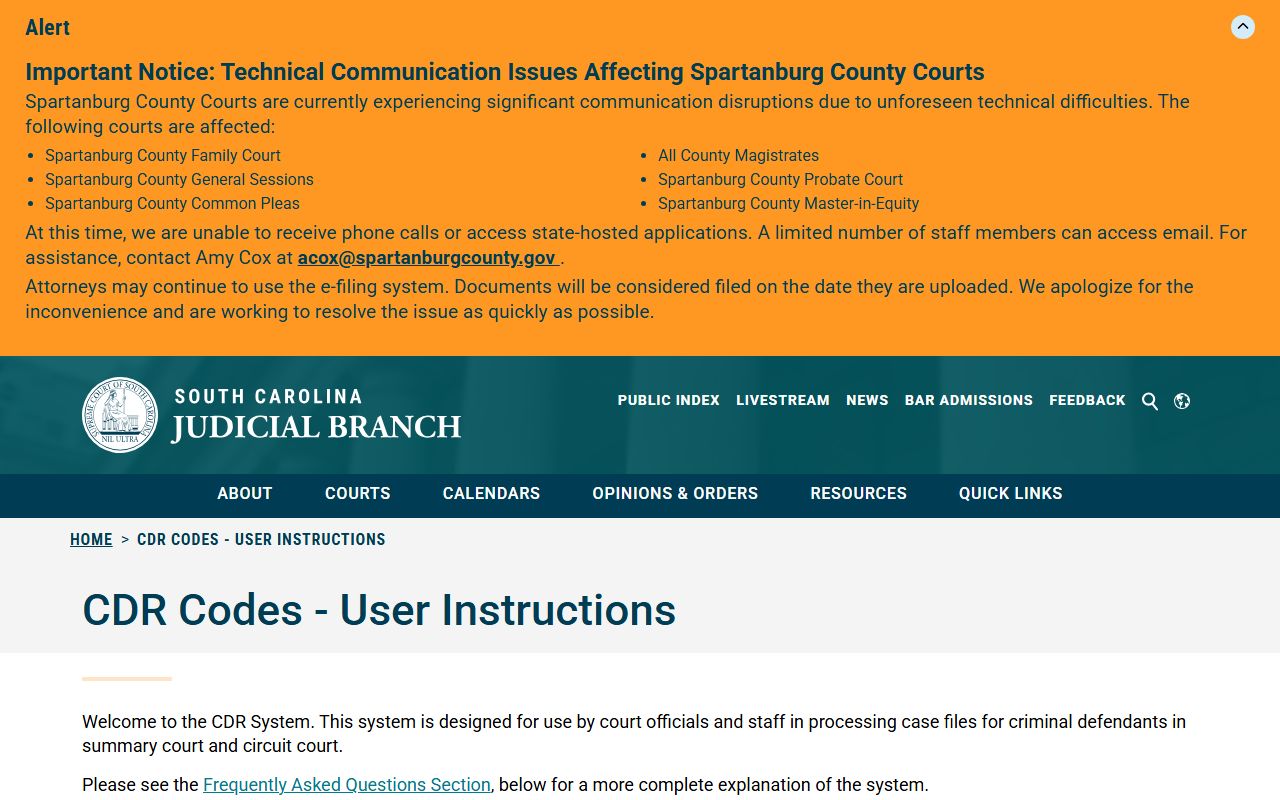 That code context helps separate the wording of a charge from the later court outcome.
Charges vs Convictions
The most common mistake in reading Dorchester County arrest records is to treat an arrest charge as a conviction. A charge is an accusation. A conviction is a final guilty result. Public records can show charges that were dismissed, reduced, amended, or nolle prossed. Public records can also show convictions after a plea or trial. The difference affects expungement, job screening, court-copy requests, and how a person explains the record.
| Charge | Conviction | |
|---|---|---|
| Stage | Appears after arrest, warrant, citation, complaint, information, or indictment. | Appears after guilty plea, guilty finding, or final adjudication. |
| Record source | Jail booking, bond, warrant, Magistrate, Municipal, Public Index, or General Sessions. | Disposition, sentencing, probation, and final court-result entries. |
| Meaning | The state alleges an offense. | The court has a guilty outcome for the charge. |
| Can it change | Yes, it may be amended, dropped, dismissed, or nolle prossed. | Usually changes only through appeal, post-conviction action, pardon, or expungement if eligible. |
Public Access Limits
South Carolina access law makes many court records public, but the public view is limited. SC Code Title 30 Chapter 4 gives the general Freedom of Information Act framework. SC Code Title 30 Chapter 2 restricts misuse or disclosure of protected personal identifying information and bars certain commercial-solicitation uses of public records. Dorchester County cites that privacy law in public-records context.
The personal identifying information source in the manifest is tied to Dorchester court charge records. 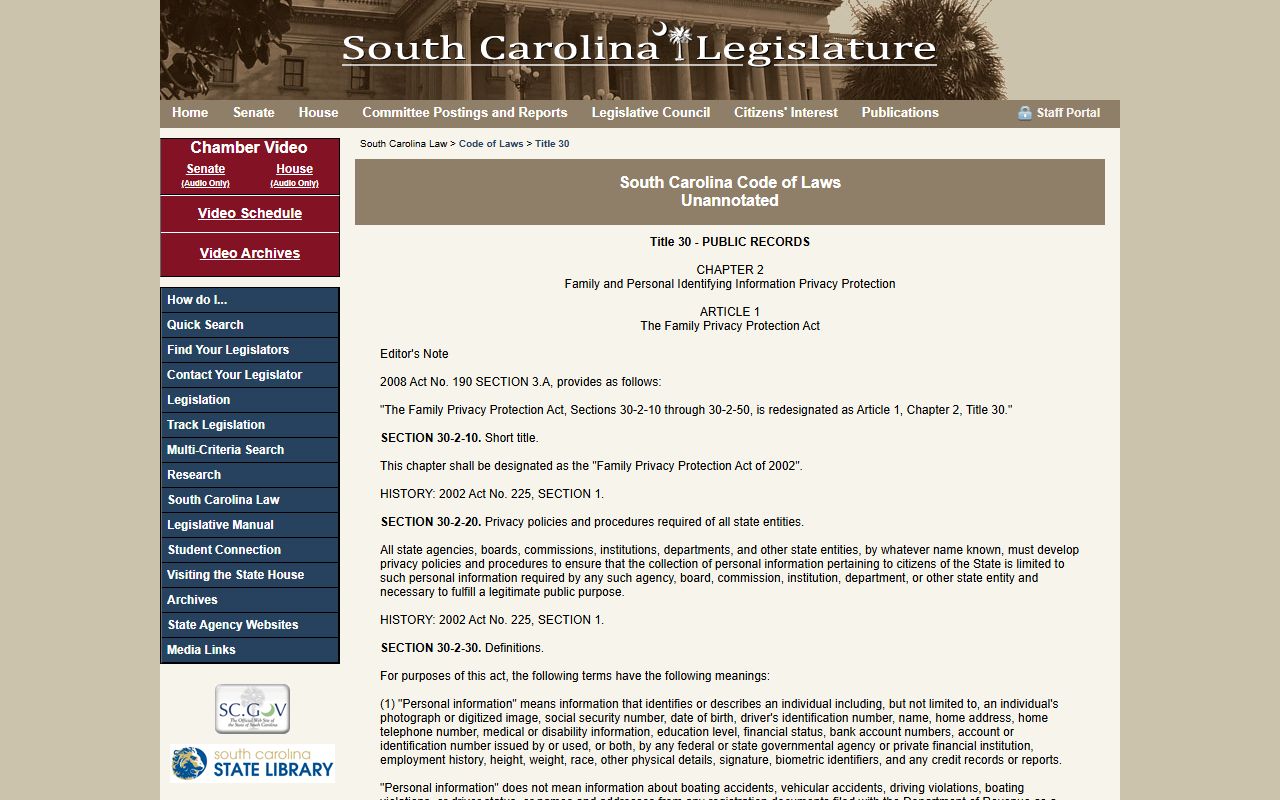 Privacy limits explain why a public charge search may omit addresses, identifiers, or confidential reference data even when the case itself is public.
Dorchester Court Charge Codes
South Carolina Criminal Data Report codes are four-digit criminal offense codes used in summary and circuit court processing. They help distinguish similar charge labels and connect a charge description to a code used by the courts. A Dorchester arrest entry may use plain-language charge text, while a court charge record may add or rely on offense-code data. The code helps identify the alleged offense, but it does not prove guilt.
Severity depends on the offense and court route. General Sessions is the criminal side of Circuit Court for felony and serious criminal matters. Magistrate Court handles criminal and traffic offenses that generally carry a fine or jail sentence of not more than 30 days, along with warrants, bond, preliminary hearings, and related summary-court work. Municipal Courts handle city or town ordinance, traffic, and lower-level criminal matters.
Dorchester Charge Record Channels
No single Dorchester County database combines booking, charge-code lookup, warrants, court disposition, and statewide criminal history into one public screen. The access chain is split. Citizen Connect covers custody and booking. Public Index covers Circuit and Magistrate court case information where indexed. CDR Codes explain offense-code meaning. The Clerk of Court and Criminal Clerk handle General Sessions records and certified-copy questions. Sheriff's Office and Detention Center public-records requests use the sheriff records request portal rather than the court clerk.
For arrest records tied to current confinement, use the booking path or call the Detention Center. For court charges after arrest, check the court route. For bond or warrant context, contact the issuing Magistrate Court, Central Bond Court, Municipal Court, or Criminal Clerk depending on where the matter sits. For full case disposition and sentence, use the criminal case file instead of relying on booking text.
Dorchester Background Check Limits
Arrest records and court charges after arrest are not complete criminal-history reports. A booking may show an arrest that has not yet produced a filed charge. A court charge may later be dismissed or changed. A public index may not show confidential, sealed, expunged, juvenile, or newly processed details. For regulated screening, a consumer-reporting agency must follow Fair Credit Reporting Act procedures. Public records are useful for direct court checking, not as a substitute for a lawful background-screening process.
Important: Do not use arrest or charge lookup results alone for credit, hiring, rental, insurance, or other FCRA decisions.
Restricted Dorchester Charge Records
Juvenile records are generally confidential in South Carolina. Dorchester Clerk maintains juvenile paperwork, but public access is limited by statute and court authorization. Family Court matters involving minors are also restricted. Sealed records, expunged records, confidential reference lists, and personal identifiers may not appear in the public index. The South Carolina Judicial Branch also notes that home address information is no longer displayed on Public Index for new and existing cases as of January 1, 2026.
Juvenile confidentiality is one of the clearest limits on public charge records. SC Code Section 63-19-2010 governs juvenile record confidentiality. 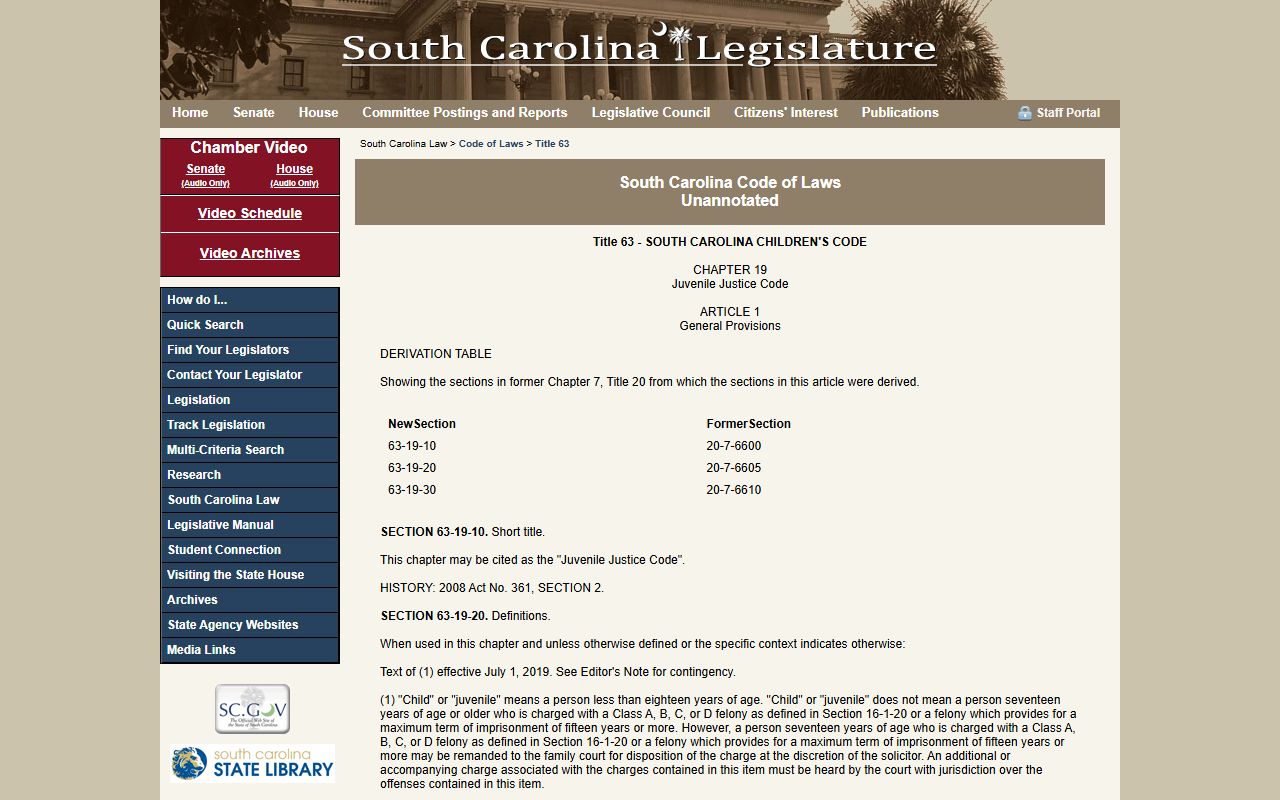 If an arrest or charge involved a juvenile matter, ordinary public search may not show the record even when a law-enforcement or court event occurred.
Note: A missing Dorchester charge result can mean no filed case, a different court venue, delayed processing, restricted access, or an expunged record.